Due to the effects of Hurricane Dorian, Bahamians are seeking to emigrate to the United States rather than wait for reconstruction of their homes. Members of Congress have “called for a suspension of visa requirements to help reunite stranded Bahamians with U.S. relatives.” Trump has expressed that “we have to be careful, everybody needs totally proper documentation.” However, one Bahamian, Anthony Morley, lost his passport in the flood and would not be able to produce “proper documentation” and find relief under this existing rule. The administration may extend temporary protect status (TPS) to Bahamians who cannot safely return to their homes. (See here https://reut.rs/2maymVS). U.S Representative Adriano Espaillat states, “To turn our backs on people that need help is un-American.” Update: The White House said on Wednesday, 9/11/2019, that the US will not give temporary protected immigration status to Bahamians affected by Hurricane Dorian. See here: https://bit.ly/2lJPXDW

USCIS has sent out letters recently denying patients’ requests to stay under a program called “medical deferred action.” Medical deferred action allows people who need extreme medical treatment to extend their visa for two-year periods. These decisions will now be made by US Immigration and Customs Enforcement (ICE) instead of USCIS. However, this policy change was not publicly announced and the denial letters did not mention that requests must now be submitted to ICE. WBUR interviewed two patients who received denial letters – one with a rare vascular tumor and another with cystic fibrosis. Listen to their stories here: https://n.pr/2m0yjvM

On Thursday, the Ninth Circuit ruled that children in immigration detention must receive basic supplies, such as edible food, clean water, soap, and toothpaste. The Justice Department lawyer, Sarah B. Fabian, argued that soap and toothbrushes might not be necessary when the children should only be detained for a short time. Judge Berzon, in her opinion, wrote “Assuring that children eat enough edible food, drink clean water, are housed in hygienic facilities with sanitary bathrooms, have soap and toothpaste, and are not sleep-deprived are without doubt essential to the children’s safety.” See also https://nyti.ms/306ceuL.

In a parking lot across from a migrant shelter in the border city of Tijuana, a non-profit organization called “Yes We Can” has converted a school bus into a school. The program, “Schools on Wheels,” not only offers a bilingual education, but a place of security for these children. Yes We Can has also partnered with World Central Kitchen to provide daily lunches for the children. They currently teach 37 students from ages 5-12 and are planning on taking on 20 more. Yes We Can plans on launching a program for teenagers as well. Estefania Rebellon, the director of this program, has stated “We can be in a bus, in a house, in a boat, it’s more about what we teach the children.” Photo from: https://www.yeswecan.world/updates

On Sunday, architects and professors Ronald Rael and Virginia San Fratello manifested their “Teeter-Totter Wall” idea from 2009 into a reality. The pink seesaws were placed in between the steel slats at a section of the border wall in Sunland Park, New Mexico, bringing children and adults to the fence to play with people on the other side. In an email, the architects explained that “the seesaws are meant to tell the story of ‘how the actions on one side of the border have direct consequences on the other.'” See https://n.pr/2YsNm2U.

On Monday, Attorney General William Barr ruled that Asylum-seekers who fear persecution due to threats against their family members will no longer be eligible for asylum. Barr argued that Congress could not have intended the asylum laws to include persecution of an asylum-seeker’s family members. Although the Attorney General has the authority to overrule decisions from the Board of Immigration Appeals (BIA), this move is just another step in efforts to restrict asylum claims in the United States.

León Rodríguez, the director of U.S. Citizenship and Immigration Services (USCIS) from 2014-2017, discusses the changes USCIS has experienced under this Administration. In February 2018, USCIS changed its mission statement from “USCIS secures America’s promise as a nation of immigrants” to “USCIS administers the nation’s lawful immigration system… while protecting Americans.” See https://n.pr/2ojPfLW León Rodríguez attacks these changes by reiterating the true purpose of USCIS: to “act as the service-oriented gateway through which vital international talent and enterprise reach the United States, through which U.S. citizens reunite with loved ones from abroad — through which we can advance our national security interests by administering humanitarian programs that distinguish the United States as a beacon of freedom.”

A new Trump Administration policy goes into effect today. This policy will expand “expedited removal” – “a provision of the law that permits the Department of Homeland Security (DHS) to rapidly deport certain individuals without an opportunity to see an immigration judge.” Previously, expedited removal only applied to individuals crossing the border, but expanding expedited removal will give these enforcement agencies the authority to deport individuals from anywhere in the United States who crossed the border without a visa less than two years ago. The American Civil Liberties Union (ACLU) and the American Immigration Council already announced that they will challenge this policy in court. See more here: https://nyti.ms/30MZ45V

ICE began using three privately-run jails in Louisiana and Mississippi last month to hold immigration detainees. This expansion is troubling given the remoteness of these areas that would make it difficult for detainees to access attorneys, witnesses, and their families. Further, these facilities have a history of “human rights abuses, staff mistreatment, and inadequate medical care.” Because the Department of Justice (DOJ) is no longer using these facilities to hold federal inmates, ICE is taking over.

This article looks at the crisis happening at the border from the perspective of a border patrol agent who just wants to keep his head down. The agent, who did not want to reveal his identity, stated “The most I felt I could do was make sure toilet paper was stocked. Or if someone wanted an extra juice, I’d give them an extra juice. Or maybe do something to make someone’s day a little nicer; maybe smile and treat them with respect. That’s all I felt I had the power to do.” He also differentiated between two types of border patrol agents: ones that see the immigrants in custody as criminals or ones feel that they are part of a broken immigration system.

The Kettering Foundation hosted 86 conversations across 58 towns and cities in the US to report on public opinion of immigration issues. These public forums provided a space for individuals with seemingly divergent views to deeply discuss the immigration issues in the US. The report found that there is much more common ground among American citizens than people think. After listening to different viewpoints, opening up about personal concerns, and learning more about the issue, the participants were able to discuss practical, unbiased possible solutions to the complex issue. View the full report here: https://bit.ly/32maNda

The Trump Administration aims to cut back on programs that protect military families from deportation, such as Parole-in-Place (PIP) and Deferred Action. The policy behind these programs was to ensure that soldiers, sailors, airmen, or Marines could focus on their military jobs and not worry about their undocumented family members in the US. Immigrants have always served in the US military and “since Oct. 1, 2001, USCIS has naturalized 129,587 members of the military.” [See on USCIS here: https://bit.ly/2xAPuX5]. However, the Administration seems to ignore the fact that many military members come with immigrant families and ending these programs may lead to increased disinterest in military service.

The Congressional Hispanic Caucus visited two Customs and Border Patrol (CBP) facilities in Texas on July 1, 2019. The visits shed light on both the conditions of the facilities and a secret Facebook page called “I’m 10-15” made up of about 9,500 members of mostly border patrol employees. “10-15” is a border patrol code for “aliens in custody” and the page consists of offensive and inhumane posts about migrants and the members of Congress visiting the facilities. Since discovering the private Facebook page, CBP has made a statement that it has “immediately informed DHS Office of the Inspector General and initiated an investigation.”

Due to backlogged immigration cases, the U.S. Citizenship and Immigration Services (USCIS) is working to transfer cases out of the busiest cities to field offices across the country in order to “even out processing times.” However, this plan will only apply to permanent residency applications. Although USCIS has stated that “travel times will be taken into account” when transferring cases, applicants who lack the resources to travel to other field offices may be disadvantaged.

The overcrowding issues at detention centers across the country are constantly depicted as a dangerous situation caused by an opposing party rather than what it is: a humanitarian crisis. Detained individuals are deprived of basic care in these dangerously overcrowded facilities. With 144,278 migrants taken into custody just last May, we must take meaningful action. See this NY Times article: https://nyti.ms/2WDBqu9 for more information.
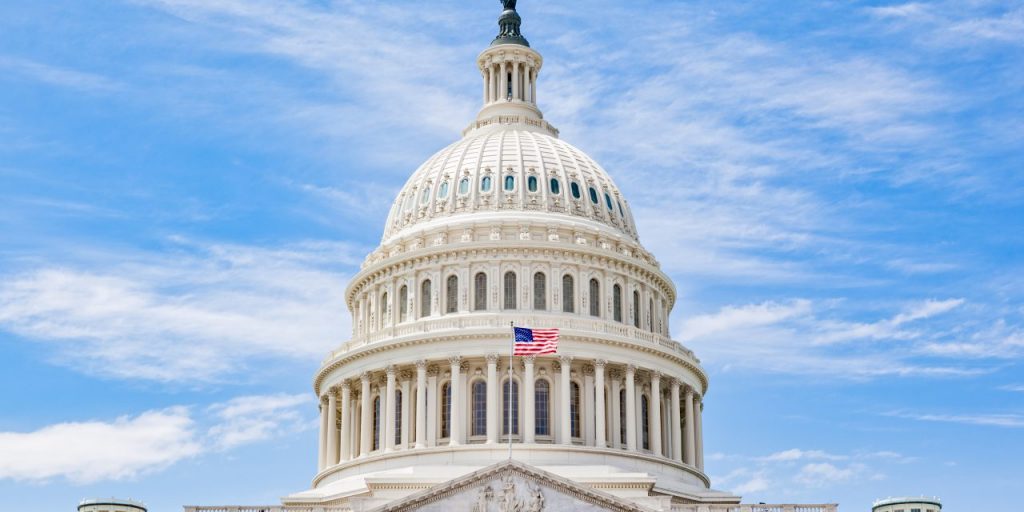
The American Dream and Promise Act of 2019 (H.R. 6) passed in the House Tuesday evening. This bill creates manageable avenues for eligible Dreamers to qualify for permanent residency and U.S. citizenship. If this bill is passed in the Senate, millions of beneficiaries of these programs will have access to new protections that will help streamline the process of adjusting their status. A bipartisan vote of 237-187 demonstrates a promising stance against the Trump administration’s efforts to eradicate these invaluable programs.

While more Mexican immigrants than ever before have obtained college degrees (the number has doubled in the past 17 years), our outdated immigration system still hinders these individuals from fully reaching their potential, to the detriment of US companies and our economy. In reforming our immigration laws, rewarding these accomplishments should be factored into the analysis in addition to family ties and humanitarian considerations.
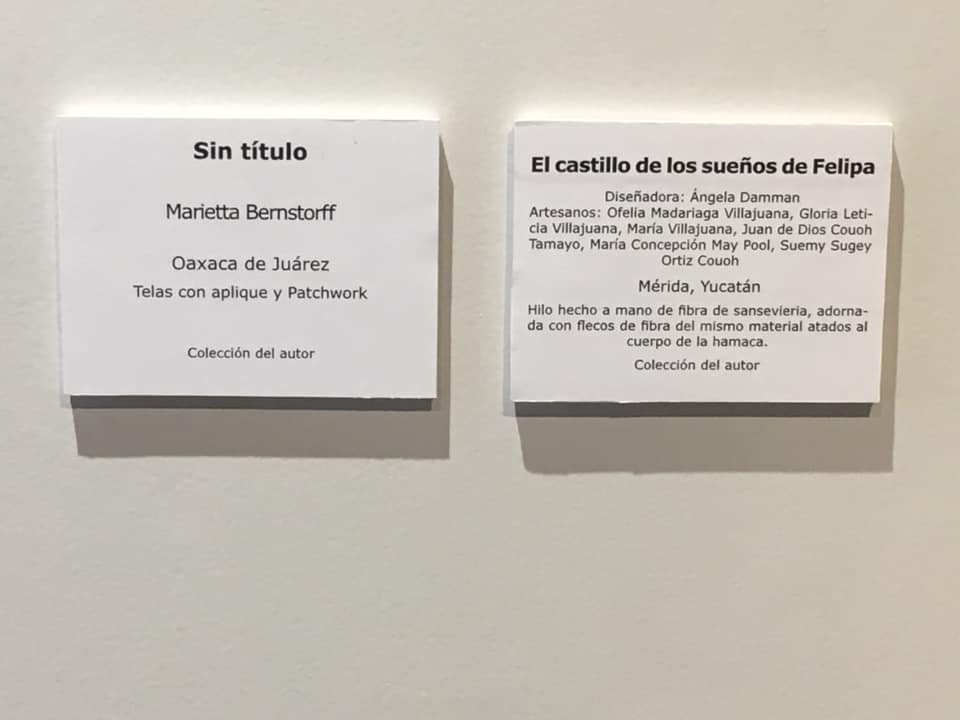
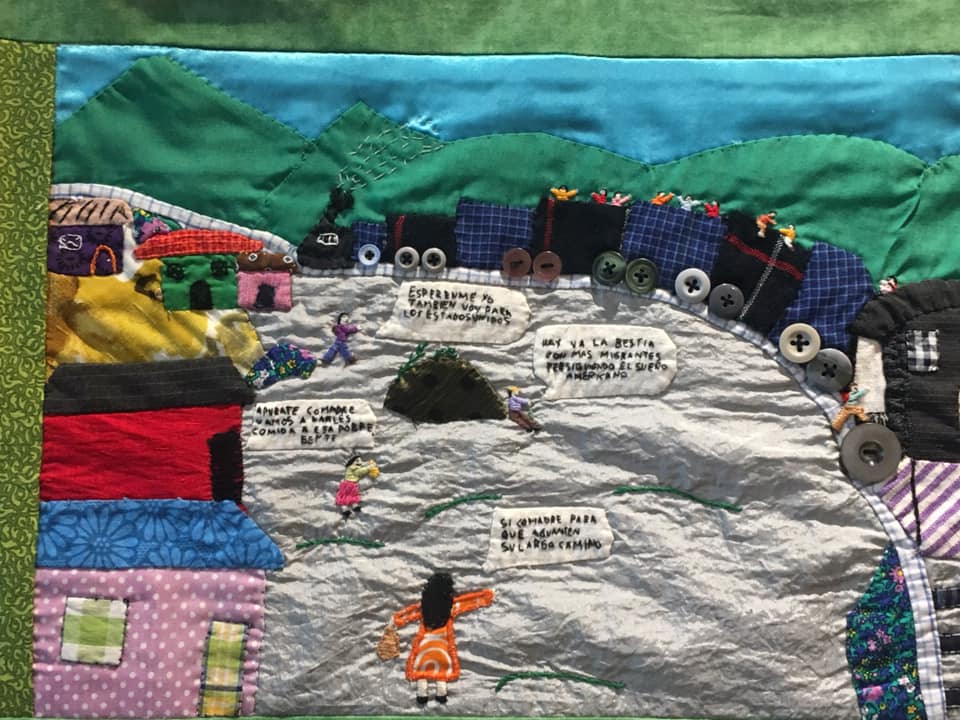
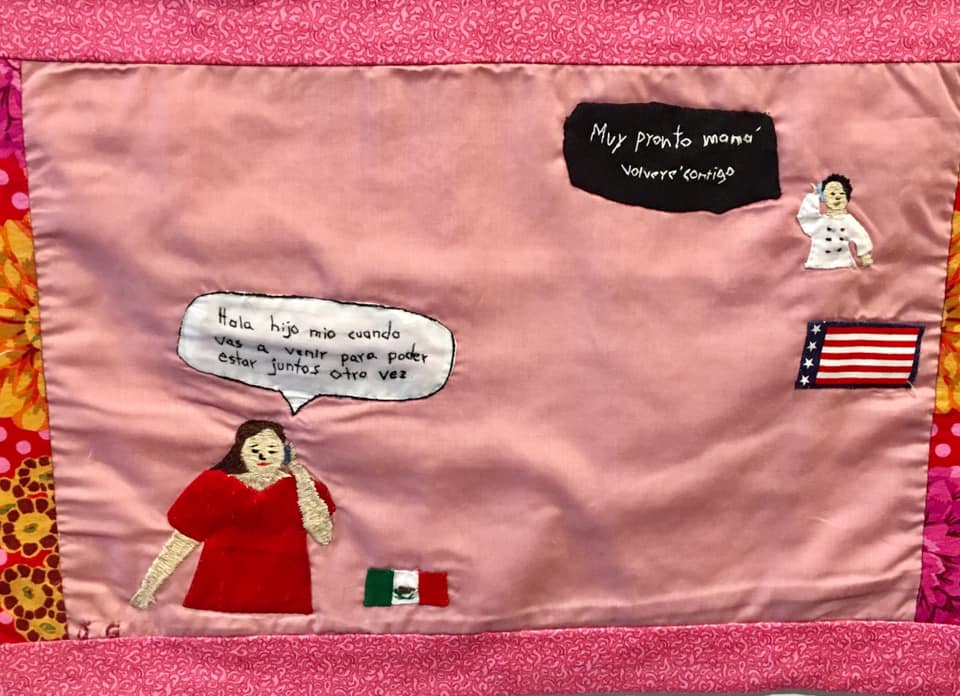
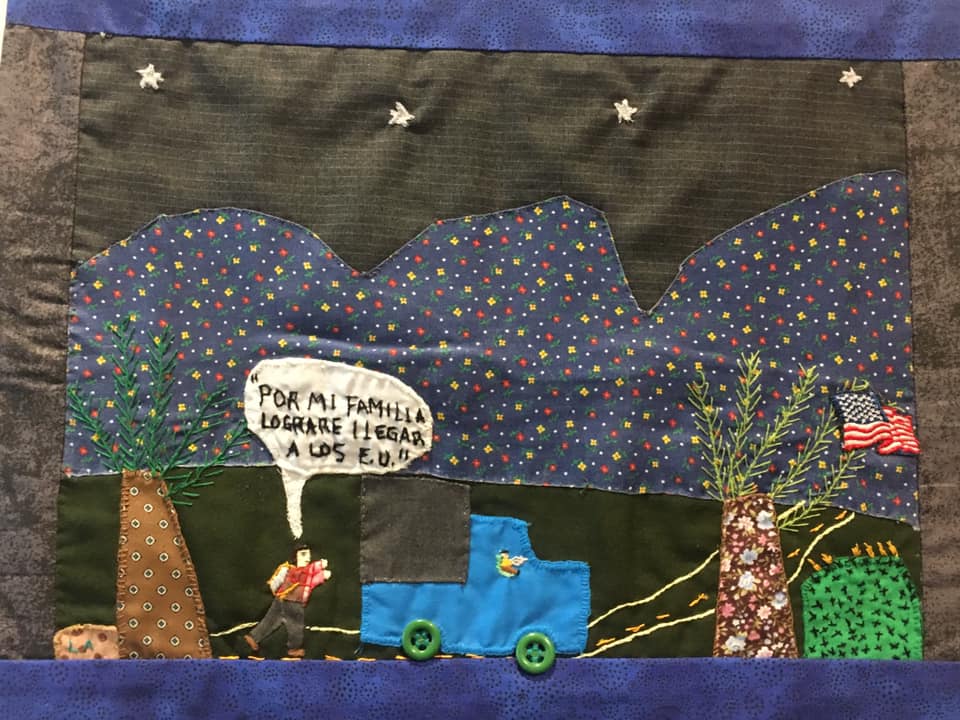
A powerful textile exhibit in Mexico City’s Museo de Arte Popular depicts the complex emotions involved in coming to the United States, leaving loved ones behind, and being left behind. The humanity in the images is something often lacking from the dialogue surrounding migration.